How to Choose Dinosaur Outdoor Decorations in 2026?
Choosing dinosaur outdoor decorations in 2026 requires more than picking the largest model available. Outdoor displays must balance scientific credibility, weather resistance, visitor safety, and visual appeal. A Tyrannosaurus beside a garden path can create excitement, but poor proportions or weak materials may quickly reduce its value.
Paleontologist and paleoartist Dr. Mark P. Witton offers a useful principle: “Evidence should guide reconstruction, not fashion.” This idea matters when selecting a dinosaur for a park, museum, resort, school, or private garden. Look for accurate body shapes, natural posture, believable skin textures, and documented references. A well-made Spinosaurus should not look like a fantasy monster. Small details count.
Check the frame, surface coating, anchoring system, and drainage design. Fiberglass may provide clean detail, while reinforced steel supports larger structures. UV-resistant paint helps protect colors under strong sunlight. Stainless fasteners can reduce rust near humid or coastal areas. Ask suppliers for material specifications, maintenance instructions, installation photographs, and realistic service expectations.
Think about the setting.
A compact Velociraptor may suit a narrow entrance. A towering Brachiosaurus needs open space and careful wind planning. Lighting should reveal facial features without creating harsh glare. Interactive sound can attract visitors, but excessive volume may become annoying. That is easy to overlook.
There is no perfect decoration. Even an accurate model can feel wrong if its scale overwhelms the landscape. Compare several designs in daylight, consider long-term upkeep, and leave room for honest reassessment. The best Dinosaur Outdoor Decorations remain memorable because they feel exciting, credible, and carefully placed.
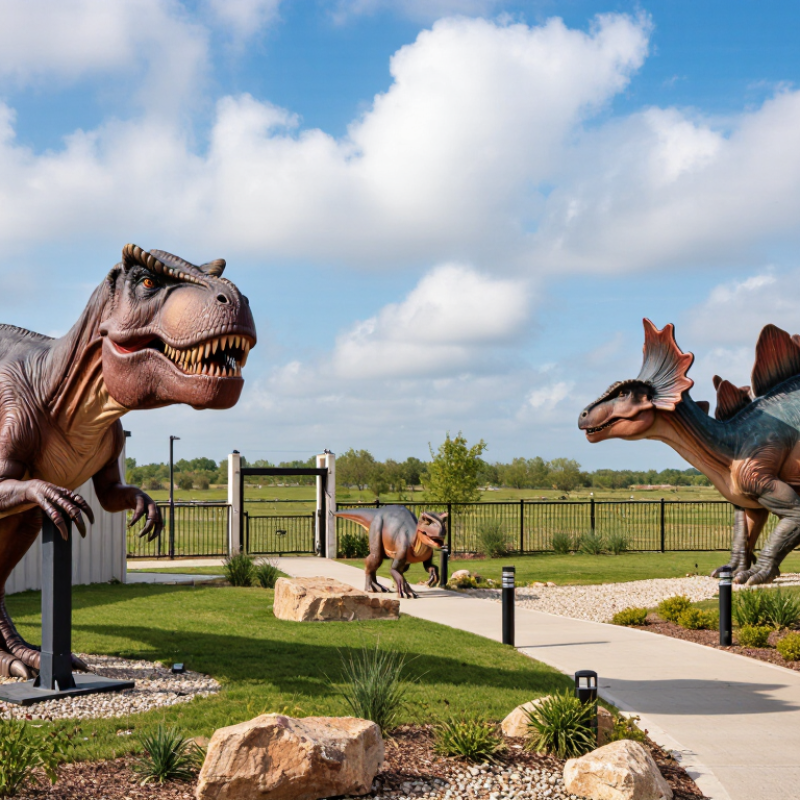
Define Your Dinosaur Decoration Goals and Outdoor Setting
When choosing dinosaur outdoor decorations in 2026, define the purpose before comparing shapes, colors, or prices. A family garden may need a friendly herbivore near a play area. A public display may need accurate anatomy and an educational plaque. For a themed event, one dramatic predator can create a strong photo point. Keep the goal specific. “I want dinosaurs” is too vague.
Study the setting at different times of day. Measure the entrance, walking paths, and viewing distance. A tall figure can disappear behind trees or overwhelm a small patio. Check soil firmness, drainage, wind exposure, and winter conditions. Place heavy pieces on stable, level ground, away from steps and narrow routes. Rounded edges and secure anchoring reduce avoidable hazards. Leave room for children, wheelchair users, and routine lawn care.
Material choice should match local weather, not only appearance. UV-resistant finishes help retain color, while sealed surfaces make mud easier to remove. Inspect joints, bases, and painted details every few months. I once favored a highly detailed model that needed more maintenance than expected. That was a useful mistake. A simpler design may serve better. Verify care instructions, installation limits, and replacement-part availability through reliable documentation. Natural shadows, nearby ferns, and a low viewing angle can make a modest dinosaur feel surprisingly alive.
Compare Dinosaur Types, Sizes, Materials, and Visual Styles
How to Choose Dinosaur Outdoor Decorations in 2026?
Choosing a dinosaur decoration starts with its intended setting. A small raptor suits a balcony, entry path, or children’s garden corner. Larger herbivores create a stronger focal point across lawns or commercial displays. I have found that oversized figures can overwhelm narrow spaces, even when their details look impressive. Measure the area before buying, including walking clearance and viewing distance.
Material affects durability, weight, and maintenance. Fiberglass offers sharp textures and a lighter structure, but it may need careful anchoring in strong wind. Resin can show convincing scales, although thin parts may become fragile after repeated weather exposure. Powder-coated metal provides a firm presence and clean silhouettes. However, its surface can feel less lifelike. Rotomolded plastic is practical for seasonal displays. It may look too smooth up close. Weather-resistant paint, sealed joints, and drainage holes are useful details. They are easy to overlook.
Tips: Match the dinosaur type to the mood. A stegosaurus feels calm and family-friendly, while a tyrannosaur adds drama. Compare realistic, cartoon, and skeleton styles beside your existing plants and walls. Neutral colors blend naturally; bright eyes and stripes demand attention. Check the base, anchors, and manufacturer care guidance before installation. I would also view the piece at night. Some colors change surprisingly under outdoor lighting. Less detail can sometimes look better.
How to Choose Dinosaur Outdoor Decorations in 2026?
Comparing dinosaur types, display sizes, materials, and visual styles
The chart uses a 1–5 planning score to compare practical outdoor decoration choices. Higher scores indicate stronger suitability for visibility, weather resistance, maintenance, or visual impact. Dinosaur length references are based on commonly accepted adult fossil estimates, while decoration-related scores are practical planning ratings rather than manufacturer test results.
Evaluate Weather Resistance, Safety, and Installation Requirements
How to Choose Dinosaur Outdoor Decorations in 2026?
Weather resistance should be checked before appearance. Look for UV-resistant plastics, sealed electrical compartments, rust-resistant frames, and drainage holes. The National Oceanic and Atmospheric Administration recorded 27 billion-dollar weather disasters in the United States during 2024. Sudden wind, hail, and heavy rain are realistic risks, not rare exceptions. Avoid decorations with exposed wiring or water-trapping cavities. I have seen small cracks become large splits after one winter. That detail is easy to underestimate.
Safety depends on weight, edges, and stability. Choose rounded surfaces and securely covered fasteners, especially around children. The U.S. Consumer Product Safety Commission reported 14,800 emergency-department injuries linked to holiday decorating in 2023. Falls were the leading hazard. This figure does not specifically measure dinosaur displays, but it highlights installation risks. A tall model needs a wide base, ground stakes, or approved ballast. Never place it near walkways, doors, overhead cables, or low branches. My first placement plan was too close to a gate.
Tips: Measure the site first. Check the local wind guidance. Use outdoor-rated cables and weatherproof connectors. Follow the manufacturer’s anchoring instructions, even when the ground feels firm. Inspect joints after storms. If children can reach it, test every loose part by hand. Document the setup with photographs, so seasonal inspections become easier. The process may feel excessive. It is not. Safety often fails through small oversights.