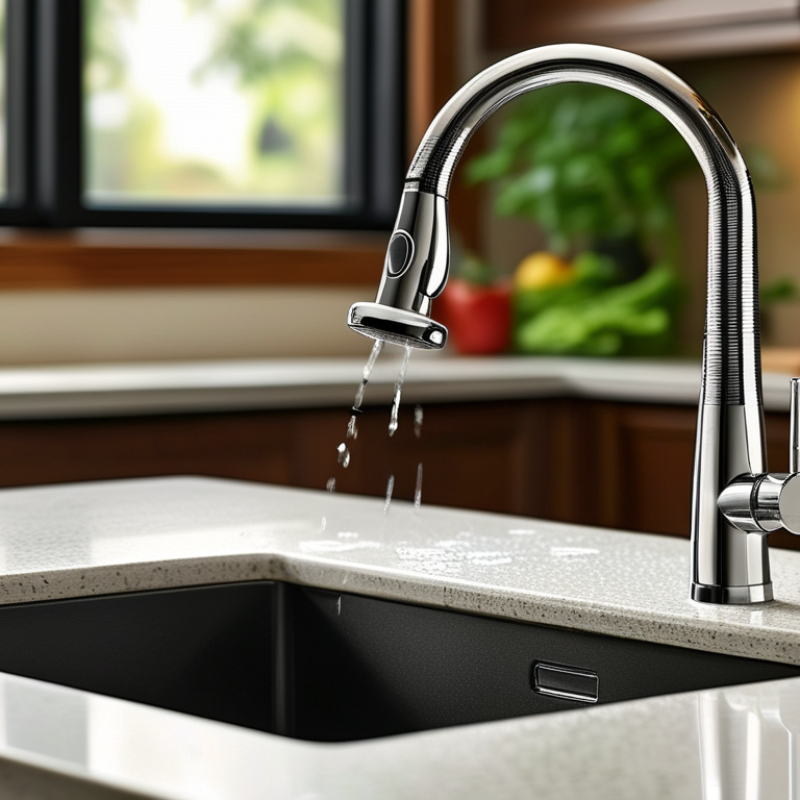
How to Choose the Best Smart Sink Faucet?

Choosing the best Smart Sink Faucet can make daily kitchen tasks cleaner, faster, and more comfortable. Yet the most advanced model is not always the right choice. A faucet with voice control may look impressive, but it can feel inconvenient when your hands are covered with flour. A reliable choice should match your sink size, water pressure, countertop layout, and household habits.

Start by examining real performance, not only attractive product claims. Check whether the sensor responds quickly under bright kitchen lighting. Test the spray head, temperature controls, and pull-down hose for smooth operation. In my experience, small details matter. A stiff handle becomes annoying every morning. A weak docking magnet can leave the spray head hanging awkwardly. You should also confirm the faucet’s material, filter access, warranty, and replacement-part availability. These details often reveal a manufacturer’s reliability better than a long feature list.

Smart functions should support practical routines. Automatic shutoff can reduce water waste, while adjustable temperature limits may improve family safety. However, connectivity features require careful thought. Wi-Fi may add convenience, but it can also create setup problems or privacy concerns. Read independent reviews and compare installation instructions before purchasing. Even professional recommendations can miss your specific kitchen conditions. Measure twice. Choose once. A well-selected Smart Sink Faucet should feel dependable, easy to maintain, and quietly useful rather than complicated.

How to Choose the Best Smart Sink Faucet?

Smart Sink Faucet Types and Core Features

Choosing the right smart sink faucet starts with its control type. Touchless models use infrared sensors and suit busy kitchens or shared bathrooms. Touch-activated faucets respond to a wrist or forearm tap. They work well when hands are dirty. Voice-enabled models can start water, set temperatures, or control measured volumes. App-connected versions may track usage and alert owners about unusual flow.

Core features matter more than novelty. The U.S. Environmental Protection Agency’s WaterSense specification limits bathroom faucet flow to 1.5 gallons per minute, compared with the older 2.2-gallon standard. That difference can reduce waste without making handwashing feel weak. A 2024 Grand View Research market outlook identifies sensor control, voice integration, and water monitoring as major smart faucet developments. Look for adjustable temperature limits, reliable manual override, battery warnings, and leak detection. No sensor is perfect. Steam, reflective sinks, or a small child’s movement can trigger false responses. I would test the sensing distance before installation. Also check cabinet space, power access, and connection stability. A beautiful faucet becomes frustrating when batteries sit behind a fixed plumbing line. Temperature memory sounds convenient, but it needs careful household settings, especially around children.

Water Flow, Temperature, and Touchless Control Options

How to Choose the Best Smart Sink Faucet?

Water flow affects comfort, cleaning speed, and household consumption. The U.S. EPA WaterSense specification limits labeled bathroom faucets to 1.5 gallons per minute. This can use about 30% less water than standard 2.2-gpm models. Check the faucet’s tested flow rate, not only its screen settings. A powerful spray may look impressive, but it can create waste and splashing. I still prefer testing the stream with a real bowl. Marketing descriptions rarely show that detail.

Temperature control deserves equal attention. The CDC states that warm and cold water remove similar amounts of germs during handwashing. Therefore, choose stable, comfortable warmth instead of maximum heat. Digital controls should remember a safe setting and offer an anti-scald limit. The 2022 FDA Food Code references 100°F as a handwashing temperature in food-service settings, but residential users should follow local plumbing requirements. Too many controls can also confuse guests. That weakness is easy to overlook.

Touchless activation improves convenience when hands carry flour, grease, or raw ingredients. Look for a reliable sensor range, quick shutoff, and a manual override. Battery status matters. A dead battery should not disable the sink completely. NSF/ANSI 61 certification helps verify that wetted components meet health-related material requirements. EPA WaterSense data supports efficient flow, while CDC guidance supports practical temperature choices. Test the faucet from different angles before installation. Sensors can miss small hands, dark sleeves, or fast movements.

Sink Compatibility, Installation, and Power Requirements

How to Choose the Best Smart Sink Faucet?

Sink compatibility should be checked before comparing sensors or voice controls. Measure the sink’s mounting holes, deck thickness, and space beneath the basin. A one-hole faucet may require a plate for three-hole sinks. That small mismatch can stop installation.

The 2024 NKBA Kitchen Trends Report highlights growing interest in touchless kitchen features, but convenience depends on reliable plumbing access. Confirm the faucet’s supply-line size and connector type. Check whether the control box fits beside the drain and garbage disposal. It often does not. Leave room for shutoff valves, filters, and future servicing. Also verify water pressure and flow. The U.S. EPA WaterSense program limits labeled bathroom faucets to 1.5 gallons per minute, at least 30% below the federal standard of 2.2 gallons per minute. Lower flow can save water, but weak pressure may feel frustrating during heavy rinsing.

Power requirements deserve equal attention. Battery models simplify retrofits, while plug-in models need a protected outlet and careful cable routing. Never place electrical connections where leaks can reach them. The National Electrical Code and local regulations may require GFCI protection near sinks. Follow the installation manual, not assumptions. In practical inspections, battery access is commonly forgotten behind fully loaded cabinets. That is inconvenient. Test motion range, manual override, temperature response, and leak points after installation. I would also recheck connections after several days; an installation can look perfect and still need correction.

How to Choose the Best Smart Sink Faucet?

Compare common installation requirements before choosing a smart sink faucet. Most deck-mounted models use a 35 mm faucet hole, standard 1/2-inch water connections, and either four AA batteries or a low-voltage power adapter.

Always verify the exact hole spacing, deck thickness, plumbing connections, and power method in the product installation manual.

Material Quality, Hygiene, and Long-Term Durability

How to Choose the Best Smart Sink Faucet?

Material quality should be judged beyond a polished surface. Look for stainless steel or certified brass components that resist corrosion and water contact. NSF/ANSI/CAN 61 sets health-based requirements for materials contacting drinking water. This certification offers stronger evidence than attractive product photographs. A ceramic cartridge can also reduce dripping and handle repeated daily use. Still, no material stays perfect when harsh cleaners attack its finish.

Hygiene depends on design and maintenance. Touchless activation reduces contact with handles, especially after handling raw food. The CDC reports that proper handwashing can reduce diarrheal illness by 23–40% and respiratory infections by 16–21%. Choose a removable aerator, smooth seams, and a surface that can be wiped without trapping residue. EPA WaterSense specifications limit qualifying bathroom faucets to 1.5 gallons per minute, helping reduce waste without sacrificing normal rinsing performance. Kitchen sink models may follow different flow requirements, so check the exact certification.

Tips: Inspect the sensor response before buying. Check replacement cartridges, batteries, and aerators. Confirm the electrical rating and water-resistance information. Ask how easily internal parts can be serviced. A two-year warranty sounds useful, but replacement-part availability may matter more after five years. I once overlooked the battery compartment location; cleaning was easy, but access was awkward. That small detail changed the daily experience.

How to Choose the Best Smart Sink Faucet? - Material Quality, Hygiene, and Long-Term Durability
Evaluation Dimension Preferred Specification Why It Matters How to Verify Before Purchase Practical Rating
Material Quality and Construction
Main faucet body 304 stainless steel Offers strong resistance to corrosion in normal indoor kitchen environments and has a non-porous surface that is easy to clean. Check the technical specification for “304 stainless steel” rather than relying only on a silver-colored finish. Excellent
Main faucet body for high-salt or coastal water 316 stainless steel Contains molybdenum, which improves resistance to chloride-related pitting compared with 304 stainless steel. Confirm that 316 stainless steel applies to the wetted body and not only to an exterior decorative coating. Excellent+
Low-lead alternative Certified low-lead brass Brass provides good machinability and strength, while compliant low-lead construction helps reduce lead exposure from plumbing components. Look for applicable local potable-water certification and a stated lead-content or wetted-surface compliance claim. Very Good
Decorative or secondary parts Engineering-grade polymer used only where appropriate High-quality polymers can resist chemicals and reduce weight, but material grade and temperature resistance vary significantly. Ask for the polymer type, temperature rating, and whether it is used in a structural or water-contact component. Variable
Material to approach cautiously Zinc alloy for the primary body It can be economical and visually attractive, but it is generally less resistant to long-term corrosion and mechanical wear than stainless steel or quality brass. Check whether zinc alloy is limited to the handle or trim instead of the water-bearing body. Fair
Waterway and internal parts Lead-free waterway, ceramic cartridge, and corrosion-resistant fasteners Internal components directly affect taste, leakage resistance, operating life, and maintenance requirements. Review the bill of materials or technical documentation for the cartridge, waterway material, seals, and fasteners. Essential
Hygiene and Water Safety
Touchless activation Reliable infrared or time-of-flight sensor Reduces the need to touch the handle with dirty hands, helping limit transfer of contamination during food preparation. Test activation at different hand distances and angles; confirm that the sensor does not activate continuously or unpredictably. Highly Recommended
Sensor hygiene Adjustable sensor range with manual override Correct calibration reduces accidental activation, water waste, and contact with the faucet surface. Confirm that sensitivity can be adjusted and that the faucet can be operated manually during battery or sensor problems. Very Good
Water-contact surfaces Smooth, non-porous, easy-clean finish Smooth surfaces leave fewer places for residue and mineral deposits to collect and are easier to disinfect. Inspect seams, joints, aerator edges, and the underside of the spout for crevices or exposed porous materials. Excellent
Water quality compliance Potable-water certification appropriate to the installation region Certification indicates that the faucet has been evaluated against relevant requirements for materials and water contact. Check for a verifiable certification mark or compliance document rather than an unsupported “food-safe” statement. Essential
Backflow protection Built-in or installation-compatible backflow prevention Helps prevent contaminated water from flowing backward into the potable water supply under abnormal pressure conditions. Review the installation instructions and local plumbing requirements; do not assume every smart faucet includes the same protection. Important
Cleaning and maintenance Removable aerator and accessible filter or solenoid components Mineral scale and sediment can reduce flow and interfere with sensor-controlled valves over time. Confirm that the aerator, inlet screens, and service components can be removed without replacing the entire faucet. Very Good
Long-Term Durability and Smart Functions
Leak prevention High-quality ceramic cartridge and replaceable seals Ceramic cartridges generally provide smooth operation and strong resistance to wear from repeated handle movement. Check whether replacement cartridges and seals are available as service parts. Excellent
Electronic valve Replaceable solenoid valve with protected wiring The solenoid controls automatic water flow; replaceability can reduce the need to replace the complete faucet after a component failure. Look for a replaceable module, sealed connectors, and clear service instructions. Highly Recommended
Moisture resistance Protected electronics and an enclosure rating suitable for the installation area Water exposure, condensation, and cleaning sprays can damage unprotected control boards and connectors. Ask for the control-box or sensor enclosure rating and follow the manufacturer’s required mounting location. Essential
Power system Accessible battery compartment or safe low-voltage power adapter Easy battery replacement and protected power connections improve reliability and reduce service downtime. Check battery type, expected battery-life conditions, low-battery warning, and whether the faucet has a manual fallback. Very Good
Power outage behavior Manual operation remains available A manual fallback keeps the water supply usable if batteries fail, power is interrupted, or the sensor malfunctions. Test the manual override and verify that it does not require a mobile application or internet connection. Essential
Hose and pull-out mechanism Reinforced hose, smooth retraction, and replaceable weight or guide parts Frequent pulling and bending can stress the hose and connection points, especially in busy kitchens. Extend and retract the hose repeatedly; check for kinks, rubbing, excessive friction, and accessible replacement parts. Very Good
Surface finish Uniform, well-bonded finish compatible with the cleaning instructions A durable finish helps protect the substrate and maintain appearance, but abrasive cleaners can damage many coatings. Read the care instructions and avoid products containing abrasive particles, strong acids, or chlorine unless specifically approved. Important
Repairability Published spare-parts list and clear installation manual Replaceable cartridges, sensors, solenoids, aerators, and hoses can extend useful service life and reduce waste. Confirm parts availability, warranty coverage, wiring diagrams, and the required tools before purchase. Excellent
Selection rule: Prioritize a certified potable-water construction, 304 or 316 stainless steel or compliant low-lead brass, a ceramic cartridge, protected and replaceable smart components, accessible maintenance parts, and a reliable manual override. Ratings describe typical material and design performance; actual durability depends on water chemistry, installation quality, cleaning practices, and usage frequency.

Budget, Maintenance, and Warranty Considerations

How to Choose the Best Smart Sink Faucet?

Budget decisions should include more than the purchase price. A smart sink faucet may need sensors, batteries, filters, and professional installation. In my experience, low-cost models often look attractive but can develop sensor delays or loose connections. That lesson is expensive.

Check the full ownership cost first. The EPA WaterSense program estimates that household leaks waste nearly 10,000 gallons of water yearly. A reliable touchless shutoff can reduce waste, but only when its sensor responds accurately. The U.S. Department of Energy reports that water heating uses about 18% of household energy. Faster shutoff may therefore reduce both water and energy waste. Maybe. Actual savings depend on household habits.

Maintenance details matter. Choose accessible aerators and standard replacement cartridges. Avoid sealed parts that require replacing the entire faucet. Wipe the sensor weekly, especially around cooking grease and mineral deposits. Keep spare batteries nearby. Small details matter.

Review the warranty carefully. Look for coverage periods, labor exclusions, shipping responsibilities, and electronic-component protection. A five-year warranty sounds strong, but it may cover only the metal body. Ask whether repeated sensor failures qualify for replacement. Also confirm local service availability. A warranty is useful only when support is practical. EPA WaterSense guidance and DOE Energy Saver data provide useful benchmarks, but neither can predict every household’s real-world performance.

We have the largest selection of new, remanufactured and quality pre-owned office furniture in the tri-state area.  We ship nationwide with regular deliveries to Pittsburgh, Erie, Uniontown, Washington, Akron, Cleveland, Beckley, Charleston, Clarksburg, Huntington, Morgantown, Parkersburg, Wheeling, Ashland, Ironton, and Lexington.

PITTSBURGH, PA

Showroom & Corporate Offices
1 Sexton Road
Pittsburgh, PA 15136

Local: (412) 771-0760
Fax: (412) 771-0764

WHEELING, WV

By Appointment Only
Local: (304) 232-0727

CHARLESTON, WV

Showroom
125 Lakeview Drive, Suite G
Cross Lanes, WV 25313

Local: (304) 345-3773
Fax: (681) 265-9039

MORGANTOWN, WV

By Appointment Only
Local: (304) 381-9119

HOURS OF OPERATION:

MONDAY-FRIDAY: 9am-5pm
SATURDAY: By Appointment