
Why Choose a Folding Gazebo for Outdoor Events?

Outdoor events demand more than an attractive setting. They require shelter that responds quickly to changing conditions. A Folding Gazebo provides a practical solution for markets, exhibitions, weddings, sports days, and community gatherings. Its collapsible frame can be transported in a vehicle and assembled near the event area. That saves valuable preparation time.

Small details matter. The canopy creates shade over registration tables, protects products from light rain, and gives guests a clear meeting point. During practical event setups, teams often appreciate adjustable legs and removable sidewalls. These features help accommodate uneven ground, crowded pathways, and shifting wind. The result feels organized without making the venue look permanent.

It is not a magic solution.

A reliable choice still requires careful planning. Event professionals should check the frame material, canopy stitching, connector strength, and manufacturer’s setup instructions. Proper anchoring is essential, especially on open grass or paved surfaces. The structure should never block emergency routes or accessible entrances. Teams should also inspect the gazebo before each use, because one damaged joint can weaken the entire frame.

Weather can change quickly. A Folding Gazebo may handle light rain and moderate conditions, but it is not suitable for every forecast. Experienced organizers monitor local weather information and remove the structure when conditions become unsafe. I have sometimes underestimated how much time packing takes after an event. That is a useful reminder: convenience depends on preparation.

The following outline examines portability, protection, setup efficiency, appearance, maintenance, and practical limitations. It also considers whether a Folding Gazebo truly matches the event’s size, surface, audience, and operating needs.
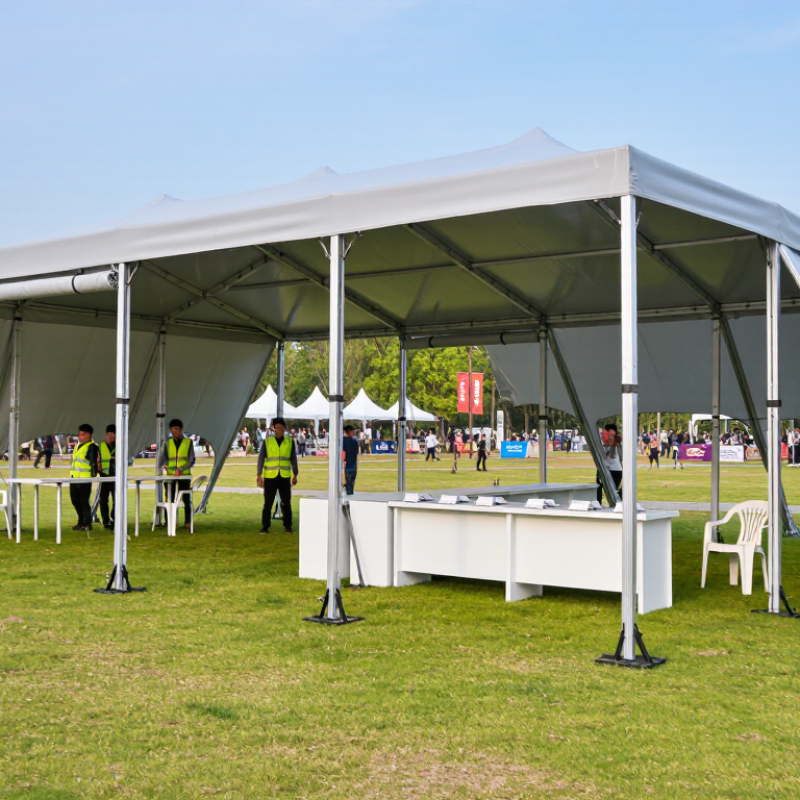
Why Choose a Folding Gazebo for Outdoor Events?

What Is a Folding Gazebo?

A folding gazebo is a portable outdoor shelter with a collapsible frame and a fabric canopy. Most models use scissor-style steel or aluminum frames, telescoping legs, and a fitted polyester roof. Some include removable sidewalls, zippered doors, or mesh panels. Unlike a permanent gazebo, it can fold into a transport bag and cover a paved courtyard, market stall, wedding area, or sports checkpoint.

In my experience, the best use comes from matching the structure to the event. A 3-by-3-meter footprint usually provides practical shade for a small information table, while larger units need more careful anchoring. Never treat a canopy as fully weatherproof. Wind, standing water, and uneven ground can quickly expose weak joints. Manufacturer wind ratings should be checked against local conditions, although these figures are sometimes difficult to compare.

Demand for temporary outdoor spaces reflects a broader trend. The U.S. Bureau of Economic Analysis reported that outdoor recreation generated about 1.1 trillion dollars in economic output during 2022, supporting millions of jobs. This data does not measure folding gazebos directly, but it shows the scale of outdoor activity. The U.S. Consumer Product Safety Commission also stresses stable setup practices for temporary structures. Practical details matter: inspect locking pins, tighten roof fabric, secure every leg, and remove the gazebo before severe weather. I still find setup time estimates imperfect, especially when one person works alone.

How Folding Gazebos Support Different Outdoor Events

Outdoor events rarely share the same layout. A folding gazebo adapts quickly to markets, school fairs, sports days, weddings, and community gatherings. One unit can shelter a registration desk, while another protects food service or first-aid supplies. The U.S. Bureau of Economic Analysis reported that outdoor recreation generated $639.5 billion in 2023, equal to 2.3% of national GDP. That scale reflects continuing demand for practical outdoor infrastructure.

For a weekend market, a 10-by-10-foot gazebo can create a clear vendor footprint. Sidewalls help protect products from light rain and reduce distracting wind. At a sports event, an open-sided structure gives officials shade without blocking spectators’ views. For weddings, adjustable walls can separate dining, storage, and guest areas. Experienced crews should inspect joints, fabric tension, anchoring points, and weighted feet before guests arrive. Small details matter.

Weather planning cannot be treated as decoration. NOAA recorded 28 billion-dollar weather and climate disasters in the United States during 2023, costing about $92.9 billion. A folding gazebo is not a storm shelter. It should be closed or removed when conditions become unsafe. I would not promise perfect protection, because uneven ground and sudden gusts expose weak planning. Venue rules, surface type, ballast requirements, and evacuation access deserve a careful check. The setup may look simple, but reliable use requires judgment.

Why Choose a Folding Gazebo for Outdoor Events? - How Folding Gazebos Support Different Outdoor Events

Outdoor Event Typical Purpose Recommended Gazebo Size Approximate Capacity Typical Setup How a Folding Gazebo Helps Important Planning Notes
Farmers’ Market Product display, sampling, sales, and customer interaction 10 × 10 ft
(3 × 3 m)
2–4 staff members with display tables 2 people
Approximately 10–20 minutes
Creates a defined sales area, provides shade, and can be folded for transport between market locations Leave clear access at the front and secure all legs against wind before opening the booth
Outdoor Wedding or Reception Guest welcome area, gift table, catering station, or weather backup 10 × 20 ft
(3 × 6 m)
10–20 guests standing, depending on furniture and use 3–4 people
Approximately 20–35 minutes
Offers flexible shelter for food service, registration, or guest comfort without requiring a permanent structure Use suitable sidewalls and flooring where needed; confirm local fire, catering, and weather requirements
Sports Tournament Team check-in, first-aid point, officials’ station, or spectator shade 10 × 10 ft
(3 × 3 m) per station
4–8 people standing or seated at one station 2 people
Approximately 10–20 minutes
Can be relocated between games or fields and provides quick shade for staff and participants Keep entrances unobstructed and use weighted anchors; do not operate in severe weather or lightning
Conference or Trade Exhibition Information desk, demonstrations, registration, or promotional displays 10 × 20 ft
(3 × 6 m)
8–16 visitors at a time, depending on layout 3–4 people
Approximately 20–35 minutes
Provides a reusable framework for graphics, counters, lighting, and product displays while simplifying transport and storage Check venue rules for maximum structure size, electrical connections, anchoring, and aisle clearance
School or Community Fair Registration, games, information services, fundraising, or volunteer activities 10 × 10 ft
(3 × 3 m)
4–8 people at a time with tables and chairs 2 people
Approximately 10–20 minutes
Supports multiple activity zones and can be packed away efficiently after the event Use fire-retardant materials where required and plan cable routing to prevent trip hazards
Outdoor Food-Service Point Order collection, beverage service, condiment station, or temporary queue cover 10 × 10 ft or 10 × 20 ft
(3 × 3 m or 3 × 6 m)
3–8 staff members, depending on equipment and workflow 3–4 people
Approximately 20–35 minutes
Adds shade and rain protection while allowing the service area to be assembled at different locations Maintain separation from cooking equipment, provide ventilation, and follow local food-safety and fire regulations

Planning reference: Capacities are approximate and assume a practical mix of open circulation space, tables, chairs, and equipment. Setup times depend on frame design, surface conditions, weather, anchoring, and crew experience. Always follow the gazebo manufacturer’s instructions and local event-safety requirements.

Key Benefits of Using a Folding Gazebo

A folding gazebo gives outdoor events a practical layer of comfort. It opens quickly, packs into a vehicle, and creates a clear gathering point. Setup takes minutes. The frame can support shade cloth, sidewalls, lighting, and simple signage. Guests notice the difference when refreshments stay cooler and registration materials remain protected.

Weather planning is not optional. NOAA recorded 28 billion-dollar weather and climate disasters in the United States during 2023. That figure does not predict every event day, but it shows why planners need flexible shelter. A folding gazebo can reduce exposure to sun, light rain, and wind-driven drizzle. It cannot replace a safety plan. Anchoring, ballast, drainage, and evacuation routes still require professional judgment. Never leave a temporary structure unsecured.

The U.S. Bureau of Labor Statistics projects 7% employment growth for meeting, convention, and event planners from 2023 to 2033. More organized events may increase demand for efficient site equipment. A folding gazebo helps teams divide space without permanent construction. It can separate check-in from demonstrations, or create a quiet staff area behind the main crowd. In my event setup experience, transport is often the overlooked problem. A compact carry bag saves effort, but folding frames can still be awkward on uneven ground. Rehearsing the setup helps. I have learned that speed alone is not enough; stability and guest flow matter more.

How to Choose the Right Folding Gazebo

Choosing the right folding gazebo starts with the event, not the color. The Outdoor Industry Association’s 2024 Participation Trends Report recorded 175.8 million U.S. outdoor participants in 2023. That scale shows why adaptable shelter matters. Measure the usable area first, then allow space for chairs, serving tables, and movement. A 3 x 3 metre gazebo suits a small registration point, while larger gatherings may require several units.

Check the frame material, joint quality, and packed weight. Aluminum is easier to carry, but steel often feels steadier in demanding conditions. Do not judge stability by weight alone. Review the manufacturer’s wind guidance and use suitable ballast on every leg. NOAA recorded 27 separate billion-dollar weather and climate disasters in the United States during 2024. Weather planning is not optional. Still, a gazebo is temporary shelter, not a storm solution.

The canopy should resist water, fading, and tearing. Look for clear fabric specifications, tested flame-performance information, and replaceable parts. NFPA 701 is a recognized test method for flame propagation in textiles and films, although compliance requirements vary by venue. Practice opening the gazebo before event day. I once underestimated setup time and created unnecessary pressure. That mistake changed my checklist: packed dimensions, carry handles, drainage, anchors, sidewalls, and warranty support now matter as much as appearance. Check the venue’s rules, too. Some locations restrict anchoring methods or require documented safety information.

Important Setup, Safety, and Maintenance Considerations

Why Choose a Folding Gazebo for Outdoor Events?

A folding gazebo offers quick shelter when outdoor conditions change. Its compact frame also makes transport and storage easier. During event setup, place it on firm, level ground. Grass can hide soft spots and uneven surfaces. Check every leg before opening the canopy fully. Locking joints should click into position. If they do not, stop and inspect the frame.

I once rushed this step and created a noticeable lean. That small mistake made the canopy unstable.

Secure every leg with suitable weights or ground anchors. Use more support when wind conditions are uncertain. Never rely on the canopy fabric alone. Remove the gazebo when strong winds or severe weather approach. Keep heaters, grills, and open flames well away from the fabric.

Leave clear walkways around the structure. Visitors should not trip over ropes, bags, or loose stakes. Check the manufacturer’s capacity guidance before hanging signs or lights.

Maintenance begins after the event ends. Shake off leaves and wipe dirt with mild soapy water. Let the canopy dry completely before folding it. Stored moisture can create mildew and unpleasant odors.

Inspect stitching, poles, connectors, and anchor points regularly. Replace damaged parts instead of forcing them back into use. I sometimes overlook minor scratches on metal joints. They can become rust problems later.

A simple storage checklist helps, although I still miss an item occasionally.

We have the largest selection of new, remanufactured and quality pre-owned office furniture in the tri-state area.  We ship nationwide with regular deliveries to Pittsburgh, Erie, Uniontown, Washington, Akron, Cleveland, Beckley, Charleston, Clarksburg, Huntington, Morgantown, Parkersburg, Wheeling, Ashland, Ironton, and Lexington.

PITTSBURGH, PA

Showroom & Corporate Offices
1 Sexton Road
Pittsburgh, PA 15136

Local: (412) 771-0760
Fax: (412) 771-0764

WHEELING, WV

By Appointment Only
Local: (304) 232-0727

CHARLESTON, WV

Showroom
125 Lakeview Drive, Suite G
Cross Lanes, WV 25313

Local: (304) 345-3773
Fax: (681) 265-9039

MORGANTOWN, WV

By Appointment Only
Local: (304) 381-9119

HOURS OF OPERATION:

MONDAY-FRIDAY: 9am-5pm
SATURDAY: By Appointment